Running power underground to a shed requires careful planning to ensure the supply is safe, reliable and suitable for the intended use. Trench depth, cable selection, physical protection and electrical compliance all need to be considered before installation begins.
Callinan's Electrical can assess the shed's power requirements, site conditions and cable route to determine the most suitable installation approach. Proper planning can help prevent issues such as nuisance tripping, cable damage and insufficient power capacity.
A rural electrician in Tamworth can help plan and install an underground shed supply that meets applicable safety and electrical requirements. This includes selecting suitable cabling, protection and connections for the shed's current and future electrical needs.
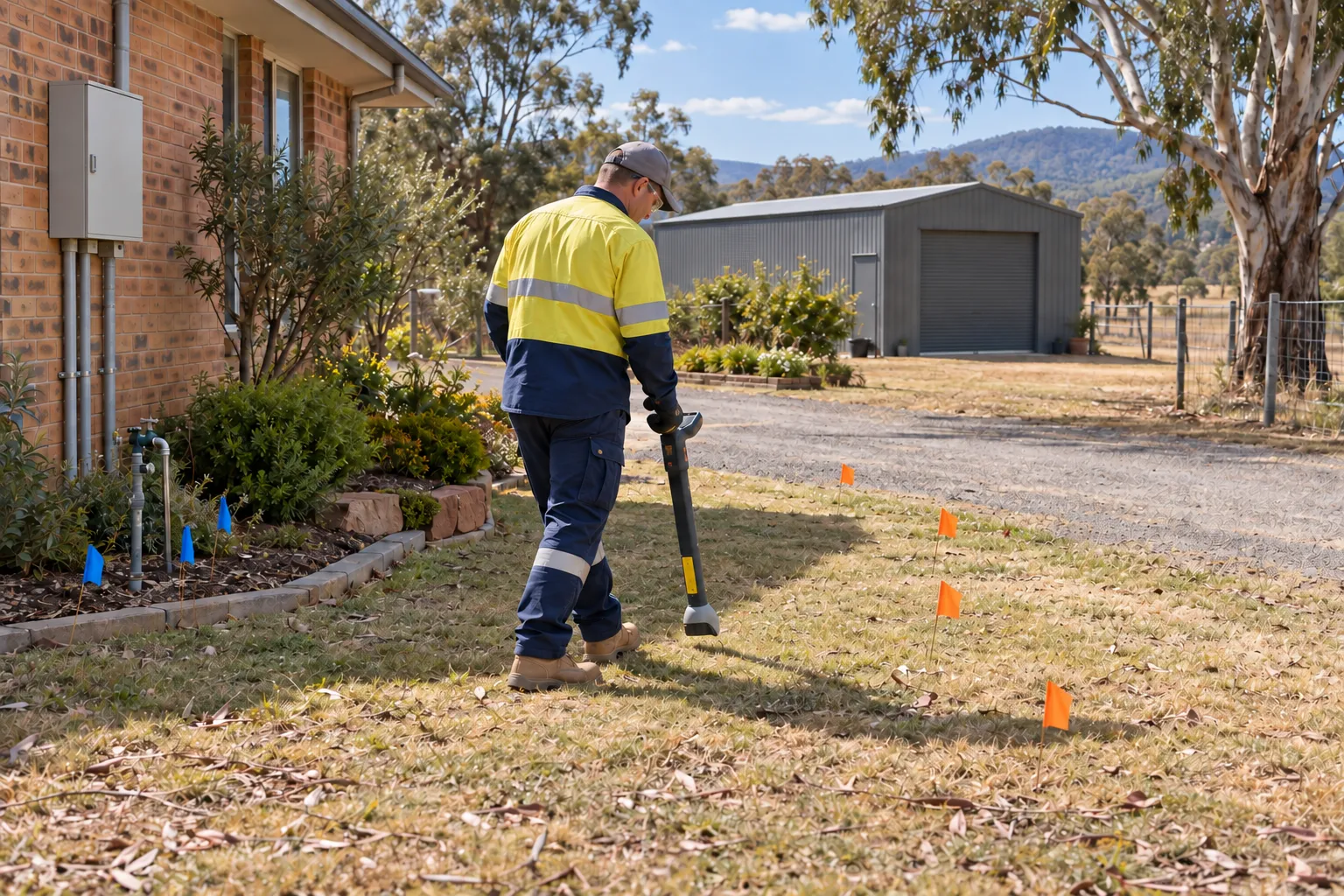
Several site factors can affect how underground power is run to a shed. Assessing the property before trenching begins helps determine the safest cable route, required protection and installation method.
The main considerations are existing underground services, the distance between the house and shed, access to the proposed route and the condition of the ground. These factors can also affect cable sizing and installation requirements.
Existing electrical cables, NBN lines, water pipes, gas lines and irrigation systems need to be identified before excavation. Service locations should be checked through Before You Dig Australia and confirmed on site where necessary.
The cable route should maintain appropriate separation from existing services and avoid unnecessary crossings. Tree roots, old services and other underground obstructions may also affect the proposed route.
The distance between the main switchboard and shed can affect cable sizing due to voltage drop, while a longer or more difficult route may increase installation time. Driveways, paths, retaining walls, gardens and other obstacles also need to be considered when planning the cable route.
Restricted access or steep sections may make trenching more difficult. In some situations, alternative installation methods may be considered where conventional trenching is impractical.
Soil type, drainage and changes in ground level can affect trench stability and cable protection. Areas with loose soil, heavy clay, pooling water or erosion risks may require additional consideration when selecting the route and preparing the trench.
Where ground conditions are challenging, the cable installation may need additional protection or a different route to maintain suitable cover and prevent future exposure.
The right cable for a shed depends on the installation method, cable run, electrical load and level of protection required. Common options include underground-rated TPS cable installed inside suitable conduit and XLPE cable designed for direct burial. The selected cable must be suitable for underground use and comply with relevant Australian standards.
TPS cable can be used for an underground shed supply when it is suitable for the installation and enclosed in appropriate heavy-duty electrical conduit. The conduit provides additional physical protection and can make the cable easier to access if future maintenance is required.
This option can be suitable where the cable route has particular mechanical damage risks or where conduit is preferred as part of the overall installation design.
XLPE cable designed and approved for direct burial can be installed underground without conduit along the entire route where permitted by the installation requirements. Its construction is designed for conditions associated with underground installation.
The choice between XLPE and TPS in conduit depends on factors such as the cable route, soil conditions, mechanical damage risks, cable length and electrical load. A licensed electrician can select the appropriate cable and installation method for the property.
The required burial depth for electrical cable to a shed depends on the installation method, location and level of protection required. The trench must provide sufficient cover to protect the cable from physical damage, future excavation and changes to the ground surface.
Depth requirements can vary on the location and installation method, so a single measurement should not be treated as suitable for every property. Areas exposed to vehicles, construction activity or future excavation may require greater protection than an undisturbed section of garden.
The surrounding conditions can affect how the underground cable needs to be protected. Driveways, vehicle areas, steep slopes, loose soil and locations where the ground is regularly disturbed may require additional protection or changes to the trench design.
Ground levels should also be considered when planning the trench. On sloping properties, erosion or soil movement can reduce the amount of cover over the cable. The trench may need to be designed to maintain adequate protection along the full route.
The trench should also be prepared before the cable is installed. A suitable base and appropriate bedding or backfill can help protect the cable or conduit from sharp rocks and other sources of damage. Warning or marker tape can be installed above the underground run before the trench is backfilled to help identify the electrical service during future excavation.
Running underground power to a shed involves planning the electrical load and cable route, preparing the trench, installing the cable and completing the electrical connections. The exact method depends on the cable type, distance, soil conditions and equipment the shed will supply.
A typical installation involves the following stages.
The electrical requirements are assessed before work begins. Lighting, power outlets and equipment should be considered, including likely future loads. This helps determine the required cable size, circuit protection and whether a shed sub-board is appropriate.
The route is then planned around existing underground services, trees, driveways, gardens and other obstacles. The cable type and protection method are selected based on the route, distance, expected voltage drop and site conditions.
The trench is excavated to the required depth and prepared to protect the cable from damage. The work should also follow applicable excavation safety requirements, including obtaining current information about underground essential services before trenching begins.
The cable or conduit is positioned with suitable separation from other services and protected from sharp rocks or other hazards. Appropriate bedding, backfilling and warning or marker tape are used before the trench is reinstated.
The underground cable is connected at the main switchboard and, where required, to a sub-board in the shed. Circuit breakers, RCD protection and earthing must be correctly matched to the installation and expected load.
Before the supply is energised, the electrical installation is tested for issues like continuity, polarity, insulation resistance, earthing and RCD operation. An electrician completes the electrical connections, testing and commissioning.
A properly planned installation helps ensure the shed receives a safe and reliable electrical supply suited to its intended use. Professional installation and testing can also help identify potential issues before the new underground supply is put into service.
The correct cable size for a shed depends on the electrical load, distance between the main switchboard and shed, installation method and protective devices. Choosing the right size helps prevent excessive voltage drop and ensures the cable can safely carry the expected current.
The cable also needs to be selected with any future electrical requirements in mind. Experts can calculate the appropriate size based on the complete installation rather than simply selecting a cable based on the shed's current appliances.
Here are some main factors:
Selecting the appropriate cable size gives the shed sufficient capacity for its intended use while allowing the installation to operate safely and reliably.
The electrical load a shed can support depends on the incoming supply, cable size, circuit protection and equipment being used. A shed with basic lighting and a few power outlets will have very different requirements from a workshop running several high-demand appliances.
When planning power to a shed, the expected maximum demand should be considered rather than simply adding together every appliance that could potentially operate at the same time.
Storage sheds and hobby spaces may only need LED lighting, general power outlets, battery chargers and small hand tools. These typically require less electrical capacity, although some spare capacity can be allowed for future additions.
Workshops using drills, grinders, saws, pressure washers or small compressors require greater capacity. The combined demand of equipment and higher starting currents from motor-driven tools should be considered when sizing the supply.
Welders, large compressors, kilns, pumps, hoists and EV chargers can require substantial electrical capacity. These may need dedicated circuits or a shed sub-board, with the electrician checking that the existing switchboard, underground cable and protection can safely support the expected demand.
If the shed may eventually support future EV charging, the cable, switchboard and circuit capacity should be considered during the initial design.
Considering future equipment during the initial design can help ensure the underground supply has enough capacity without requiring major upgrades later.
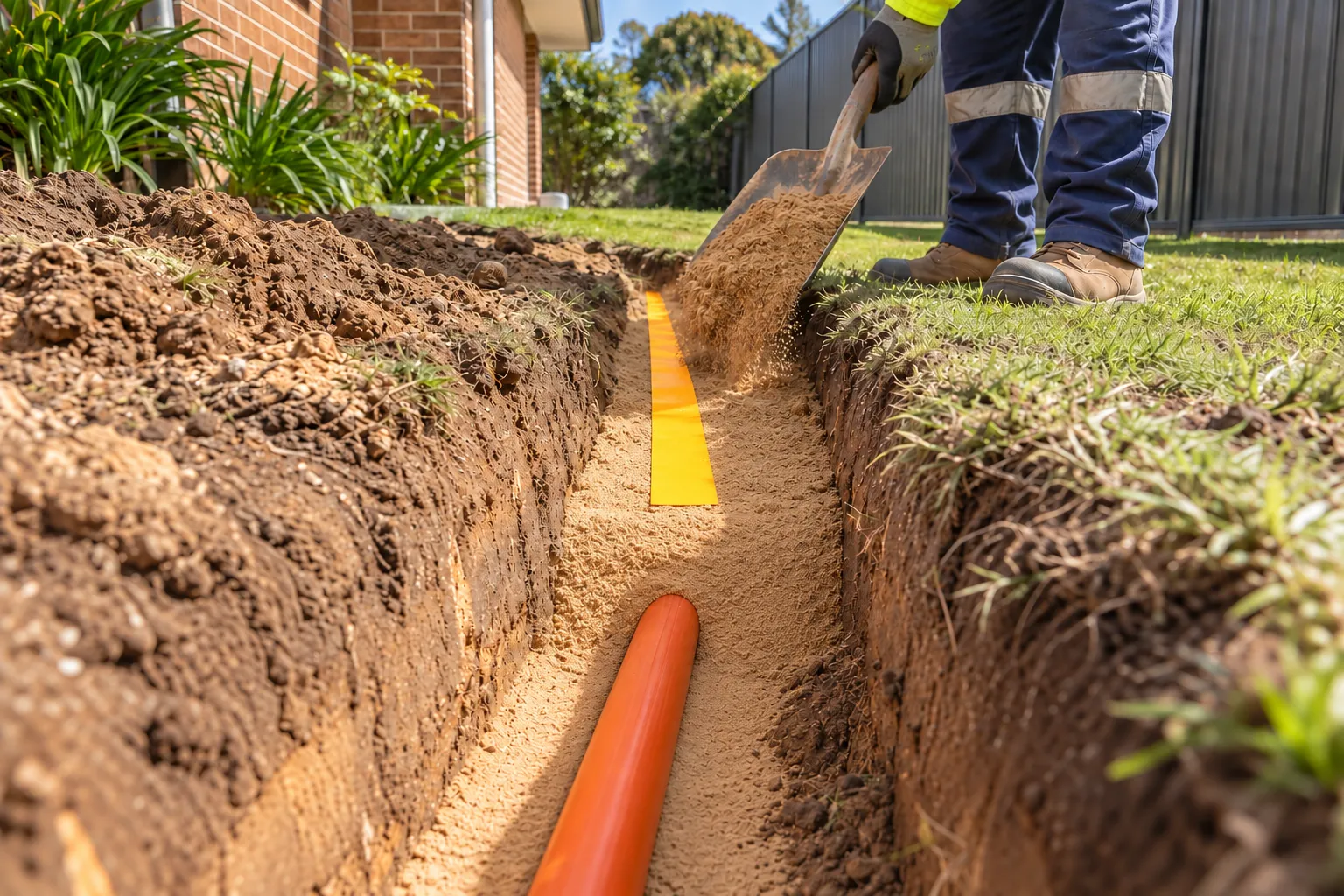
Underground power to a shed needs protection from excavation, vehicle traffic, soil movement, moisture and accidental impact. The level of protection depends on the cable type, burial conditions, installation method and risks along the route.
Protection is provided through a combination of suitable cabling, physical protection, careful trench preparation and clear marking of the underground service.
An electrician can determine the appropriate combination of cable protection, burial depth and marking based on the property's specific conditions.
The shed does not always need its own switchboard. A small shed with basic lighting and a few power outlets may be supplied by a suitable dedicated circuit from the main house switchboard, provided the cable, circuit protection and overall installation are appropriate for the expected load.
A separate shed sub-board becomes more useful when the building has multiple circuits or higher-demand equipment. It can also provide a practical way to accommodate additional circuits where the shed is a significant distance from the house.
The electrician should also assess the existing switchboard capacity to confirm whether it can accommodate the shed’s new circuits and expected electrical load.
The decision depends on the shed's electrical load, cable run, installation method and intended use. Professionals can determine whether a direct circuit or dedicated sub-board is appropriate for the installation.
Electrical connections to a shed must be designed and installed to protect against electric shock, fire and equipment faults. The supply, wiring and protective devices need to be suitable for the shed's electrical load and comply with AS/NZS 3000 and applicable local requirements.
The main safety considerations include:
These requirements help ensure the underground supply and shed wiring operate safely and reliably under normal use and fault conditions.
Running a new electrical supply to a shed requires the work to comply with applicable state or territory electrical requirements, Australian standards and relevant electricity distributor rules. The electrical connections, underground cabling, protective devices and testing must be completed by a licensed electrician.
The exact requirements depend on the property, shed and electrical installation. Electrical certification or notification may be required after the work is completed, while the shed itself may also have separate building or planning requirements. Where the work affects the property's existing supply or maximum demand, the electricity distributor may also need to be involved.
A licensed electrician can determine which approvals, notifications and certification requirements apply before installation begins. This helps ensure the underground supply is installed correctly and avoids potential delays or rework later.
Running power underground to a shed involves more than installing a cable between two buildings. The electrical load, cable size, route, burial conditions, physical protection, switchboard requirements and electrical safety all need to be considered when designing the supply.
While some preliminary site preparation may be possible, the electrical design, connections, testing and final commissioning should be completed by a professional electrician. Callinan's Electrical can assess the property and install an underground shed supply with suitable capacity for its current electrical requirements and potential future use.
